


Workplace Risk Assessment
Is your workplace safe, or just lucky? True safety doesn’t happen by chance; it happens by design. This video provides a simplified overview of occupational safety concepts, hazard assessment, and legal compliance frameworks based on the Department of Occupational Safety and Health (DOSH Malaysia) guidelines and the Occupational Safety and Health Act 1994 (Act 514).
Content Sections and Details
The presentation is divided into 5 main sections:
Section 1: The Stakes of Safety (Legal Frameworks)
- Legal Duty: Providing a safe workplace is a non-negotiable legal obligation for employers under the Occupational Safety and Health Act 1994 (Act 514), not just an optional perk.
- The Goal: To proactively identify and neutralize workplace threats before they materialize into accidents.
Section 2: The Basics of HIRARC
HIRARC is the practical continuous cycle used to ensure workplace safety. It stands for:
- Hazard Identification: Pinpointing all factors, sources, or situations that may cause harm.
- Risk Assessment: Analyzing and estimating risk levels.
- Risk Control: Introducing and monitoring preventive measures.
- Continuous Cycle: HIRARC is an ongoing process, not a one-time checklist.
- Hazard vs. Risk:
- Hazard: A source or situation with the potential for harm (e.g., frayed wires, wet floors, improperly stored chemicals).
- Risk: The combination of the likelihood of a hazardous event occurring and the severity of the injury or damage caused.
Section 3: The Anatomy of Risk (Math of Disaster)
- The Risk Formula:
{Risk} = {Likelihood} x {Severity}
- Likelihood: The mathematical chance of harm occurring.
- Severity: The ultimate outcome/extent of damage (ranging from a minor scrape to severe environmental damage or catastrophic loss of life).
Section 4: Qualitative vs. Quantitative Assessment
Risk assessment methodologies are divided into two approaches:
- Qualitative Assessment:
- Relies on human expertise and verbal descriptions (Low, Medium, High).
- Flexible, adaptable, and ideal for standard daily hazards.
- Quantitative Assessment:
- Relies on strict numerical values, scientific modeling, and concrete historical data.
- Essential for highly complex or uncertain hazards (such as long-term chemical or toxic exposure).
Section 5: Real-World Compliance and Penalties
- Compliance vs. Penalty Levels:
- High Compliance (50% – 100%): Low to manageable risk status.
- Low Compliance (21% – 49%): Formally categorizes the facility as High Risk, incurring significant penalties.
- Critical Compliance (0% – 20%): Represents an Imminent Risk, requiring immediate corrective action to avoid forced shutdown.
- Legal Penalties: Failing to maintain safety compliance can result in massive financial fines, imprisonment, or both for responsible employers.
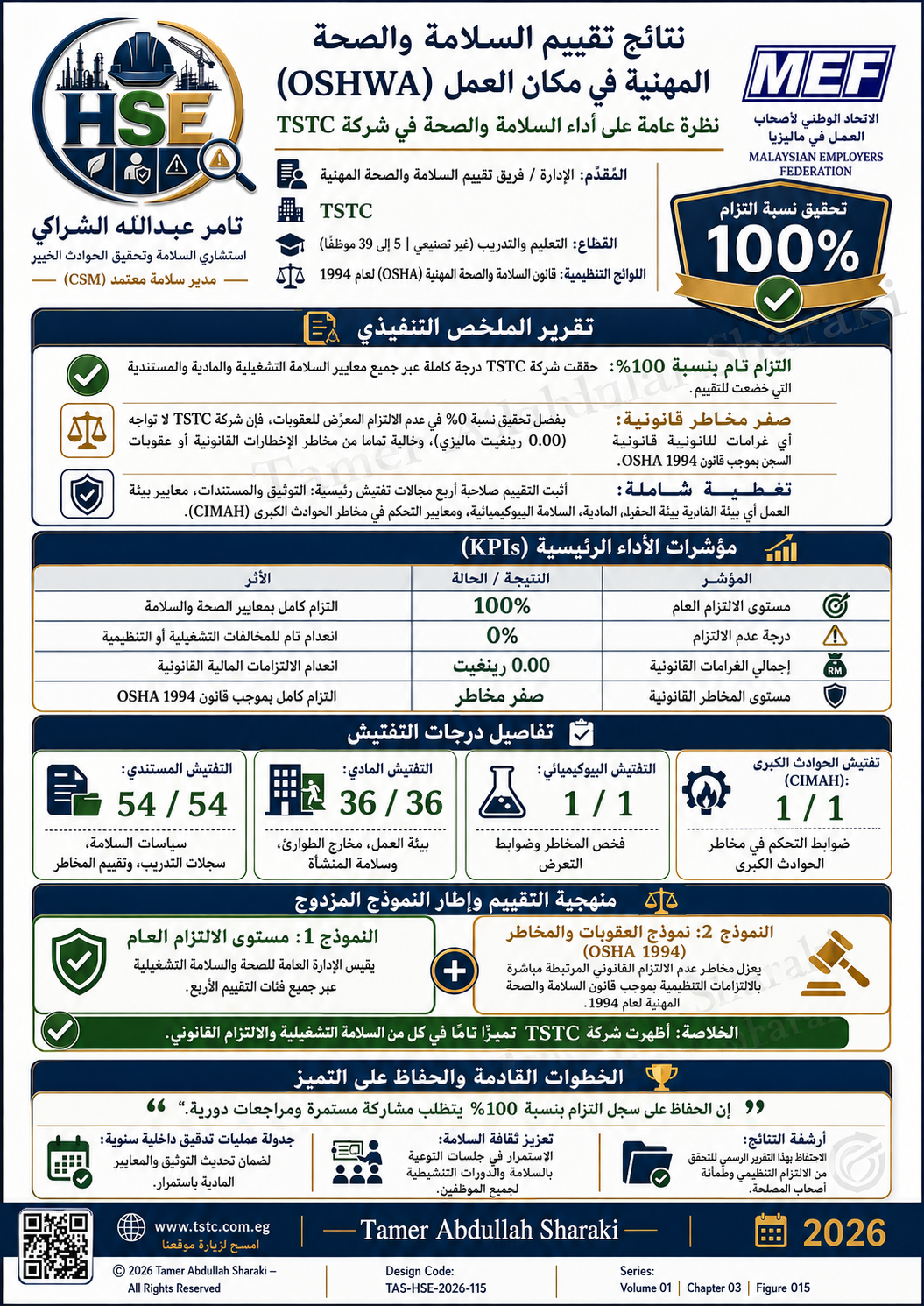
بناءً على نتائج تقييم السلامة والصحة المهنية في مكان العمل (OSHWA) الخاص بشركة TSTC:
تقرير الملخص التنفيذي
الشركة: TSTC
القطاع: التعليم والتدريب (غير تصنيعي | 5 إلى 39 موظفًا)
اللوائح التنظيمية: قانون السلامة والصحة المهنية (OSHA) لعام 1994
أبرز النقاط الرئيسية
- التزام تام بنسبة 100%: حققت شركة TSTC درجة كاملة عبر جميع معايير السلامة التشغيلية، المادية، والمستندية التي خضعت للتقييم.
- صفر مخاطر قانونية: بفضل تحقيق نسبة 0% في عدم الالتزام المعرض للعقوبات، فإن شركة TSTC لا تواجه أي غرامات قانونية (0.00 رينغيت ماليزي)، وخالية تمامًا من مخاطر الإخطارات القانونية أو عقوبات السجن بموجب قانون OSHA 1994.
- تغطية شاملة: أثبت التقييم صلاحية أربع مجالات تفتيش رئيسية: التوثيق والمستندات، معايير بيئة العمل المادية، السلامة البيوكيميائية، ومعايير التحكم في مخاطر الحوادث الكبرى (CIMAH).
- العنوان: نتائج تقييم السلامة والصحة المهنية في مكان العمل (OSHWA)
- العنوان الفرعي: نظرة عامة على أداء السلامة والصحة في شركة TSTC
- المُقدِّم: الإدارة / فريق تقييم السلامة والصحة المهنية
- المؤشر الرئيسي: تحقيق نسبة التزام 100%
مؤشرات الأداء الرئيسية (KPIs)
| المؤشر | النتيجة / الحالة | الأثر |
| مستوى الالتزام العام | 100% | التزام كامل بمعايير الصحة والسلامة |
| درجة عدم الالتزام | 0% | انعدام تام للمخالفات التشغيلية أو التنظيمية |
| إجمالي الغرامات القانونية | 0.00 رينغيت | انعدام الالتزامات المالية القانونية |
| مستوى المخاطر القانونية | صفر مخاطر | التزام كامل بموجب قانون OSHA 1994 |
تفاصيل درجات التفتيش
قوَّم التقييم شركة TSTC عبر أربعة أبعاد تفتيش رئيسية:
- التفتيش المستندي: 54 / 54 (سياسات السلامة، سجلات التدريب، وتقييم المخاطر)
- التفتيش المادي: 36 / 36 (بيئة العمل، مخارج الطوارئ، وسلامة المنشأة)
- التفتيش البيوكيميائي: 1 / 1 (فحص المخاطر وضوابط التعرض)
- تفتيش الحوادث الكبرى (CIMAH): 1 / 1 (ضوابط التحكم في مخاطر الحوادث الكبرى)
منهجية التقييم وإطار النموذج المزدوج
- النموذج 1: مستوى الالتزام العام
- يقيس الإدارة العامة للصحة والسلامة التشغيلية عبر جميع فئات التقييم الأربع.
- النموذج 2: نموذج العقوبات والمخاطر (OSHA 1994)
- يعزل مخاطر عدم الالتزام القانوني المرتبطة مباشرة بالالتزامات التنظيمية بموجب قانون السلامة والصحة المهنية لعام 1994.
- الخلاصة: أظهرت شركة TSTC تميزًا تامًا في كل من السلامة التشغيلية والالتزام القانوني.
الخطوات القادمة والحفاظ على التميز
“إن الحفاظ على سجل التزام بنسبة 100% يتطلب مشاركة مستمرة ومراجعات دورية.”
- جدولة عمليات تدقيق داخلية سنوية: لضمان تحديث التوثيق والمعايير المادية باستمرار.
- تعزيز ثقافة السلامة: الاستمرار في جلسات التوعية بالسلامة والدورات التنشيطية لجميع الموظفين.
- أرشفة النتائج: الاحتفاظ بهذا التقرير الرسمي للتحقق من الالتزام التنظيمي وطمأنة أصحاب المصلحة.
Comments are closed